Labels

Friday, 16 October 2015

Book Review--Library of Souls


IT'S HERE! IT'S HERE! IT'S HERE!

I've been waiting so long and we finally got it at the library.  I had the first hold on it so I got the first crack of the spine!

(squeal of delight)

Oh.  Sorry, let me compose myself.

--ahem--

I have been impatiently waiting for the third and final installment of Ransom Riggs' Miss Peregrine's Home for Peculiar Children to come out.  And it's finally here!  Library of Souls.


Ooooh, even the title sounds creepy.  And with good reason.  If the first book of Miss Peregrine's dipped its toe in the waters of horror writing, and Hollow City waded in it, Library of Souls plunges you right into to some pretty creepy and horrific things.

The peculiar thing is... I still wouldn't classify this as a horror book; I would call it fantasy.  I think it's because the details and vignettes described aren't done for their shock factor or just to make you shudder.*  They are woven into the story and into the action and into the characters' peculiarities to be an acceptable, if unusual for us "normals", part of that world.

I'm not going to go into the plot points but rest assured that Jacob and Emma and the peculiar gang face enormous challenges in this book.  And if the end almost feels disappointing and flat--it's really just because it means the trilogy is over and it's back to the normal unpeculiar world we inhabit.

Full salute to this wonderful, creepy, awful, fantastic series!  Bird knows when we will ever find another story of this caliber.
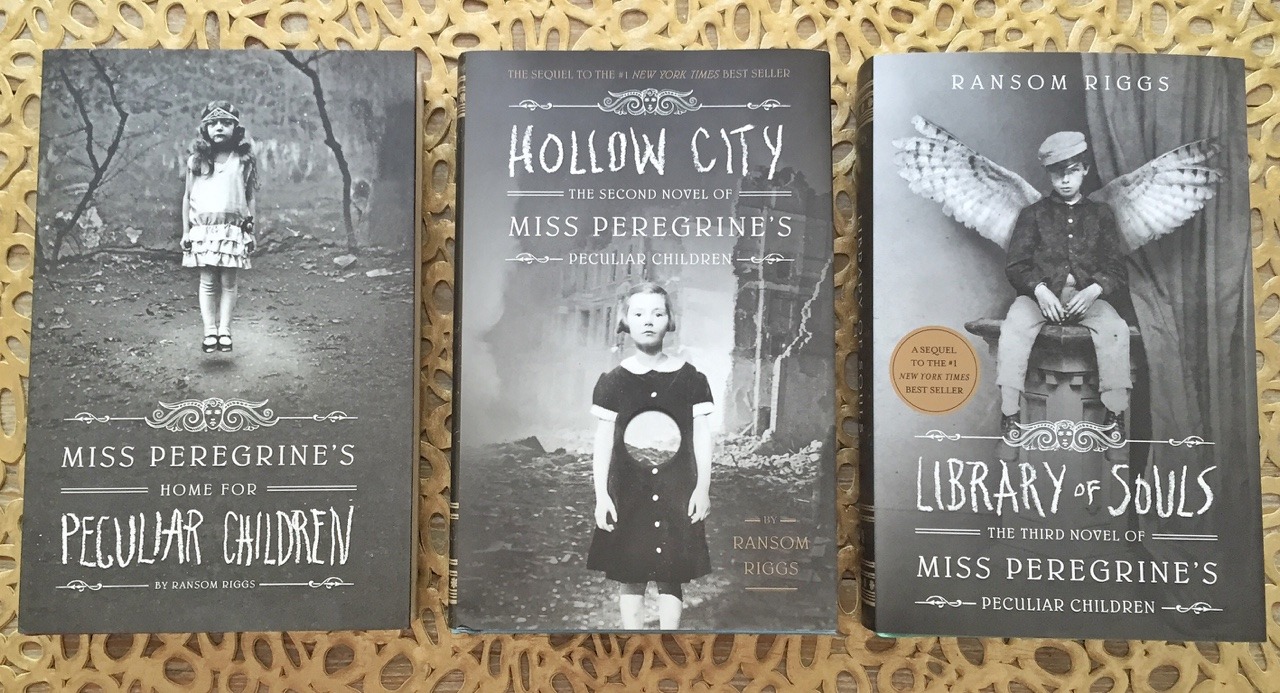
http://ransomriggs.tumblr.com/post/125872361717/i-got-my-first-ever-bound-copy-of-library-of-souls

*Caveat: O.K. the two words that made me shudder that you will understand after reading the book: Mother Dust 

Thursday, 8 October 2015

Book Review--Animal Farm


Little wonder this is considered a "classic".

I am slowly working my way through books featured in the Great Books collection and Animal Farm by George Orwell is one of the last entries given in the original list.


Let me begin by saying that I usually shy away from war books and those that deal with a lot of politics.  The latter I don't always understand and the former hurts my heart.

Orwell, as many readers before me have discovered, managed a way to explore the process, psychology and living conditions of governmental upheaval and war without devolving into heart-wrenching graphic depictions that sear pictures into your brain that you can't un-see and un-think.

As an animal lover and dedicated "fur mama", it is easy for me to fall into the personification of animals. I recognize that animals have personalities and their own language so reading an allegory that features them gives me a common ground. But, since I also believe that people are more important* this also give me just a bit of separation so I don't feel the suffering as keenly as I do in books that feature people in horrific situations. So Orwell's use of animals as characters, with people only peripherally in the plot is both accessible and shielded.

I was an oblivious child.  By that, I mean I was cheerful, well-cared for and never needed to think outside of my own little home-school-church triangle.  I was aware of news and some current events in that, I knew big names and some words but since it didn't affect me, I really didn't pay attention to things like the "Cold War" or people like "Gorbachev" they were just concepts floating around my elementary-aged head. But, eventually school and maturity (don't laugh, I've achieved some semblance of it over the years) encroached and I learned about things like communism, socialism, democracy and more. I have even instituted my own form of government at home with my family; my son calls it a "Momarchy". I also hit on some of these topics in various bible studies and discussions over the years, trying to figure out why communism and socialism are almost impossible for humans to maintain indefinitely even if at their heart they seem like good ideas.

But, like many other people, I looked in disbelief on some of the things that happened during those time periods and thought, "How could people let this happen? Don't they see it's wrong?" Animal Farm addresses that concern and more in this allegorical (means a story that means something else) tale. Things don't happen overnight.  There is a gradual build-up and step-by-step acceptance of new things and new ideas.  There is also the element of fear when judiciously wielded by a respected person who comes to power and does not show his nefarious plans in obvious ways. Admit it, things would be easier if bad guys wore black hats, pencil mustaches and chuckled, "heh heh heh" while rubbing their hands together... but it just doesn't work like that.

Reading about the animal members of the community of Animal Farm and sympathizing with their daily lives, talents and limitations, it really brings home how good people can be manipulated into thinking that bad is good and that misery is an acceptable way of life. Human nature is plainly depicted through the animal characters in this powerful book.


*Don't get too riled up about this.  I do believe animals have rights and that humans have an obligation to care for them and their habitats.  But, if there had to be a choice between my children and my dogs, kids and other people come first.

Monday, 8 June 2015

Book Review--Listful Thinking


Confessions of a scatter-brain!

In some circles (not my family) I have the reputation of being organized and on top of things. Whether or not it is completely true is irrelevant, the important thing to know is that it's not natural.

Not that it's unnatural as in bad, just that there are habits I have adopted to help me keep track of important things in life.  I will admit it is often something of a cycle, where I'll be on top of things for quite awhile and then something throws me off my stride and I scramble a bit until I get back to place where I can regroup.  But since I have found techniques that work for me, it's relatively easy to get myself back into the swing of things.

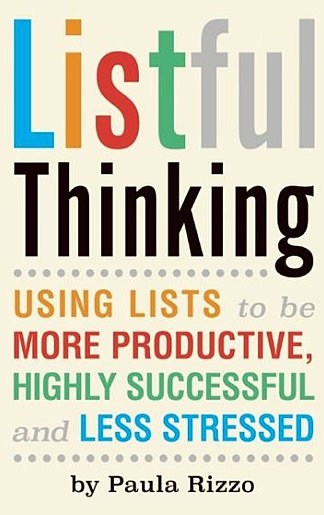
That's what this book can help with.  Listful Thinking by Paula Rizzo explores one of the more powerful tools of organization: lists.  There are dozens of types and styles of lists that you can make and she explores varying formats from notebooks to Post-Its to computer programs.  Understanding the importance of making a list, learning the types that work for your lifestyle and refining how you use them are all addressed in this short, non-threatening book about organizing your life.

Rizzo doesn't urge you to start out by completely overhauling the way you do things or making fundamental changes to your personality; she emphasizes the strengths of each kind of list and introduces ways for you to start using them to streamline your tasks and schedule. She also gives you permission to try and discard the different methods to find one that works for you.  Interspersed throughout the informational narrative are tidbits about famous/successful list-makers as well as reports on studies about memory and the human tendency to want to finish a task.

From sticky notes to digital interfaces, Rizzo offers lots of options and encouragement to find a productive system that works for you to get yourself thinking listfully.

Wednesday, 22 April 2015

Book Review--An Illustrated Book of Bad Arguments

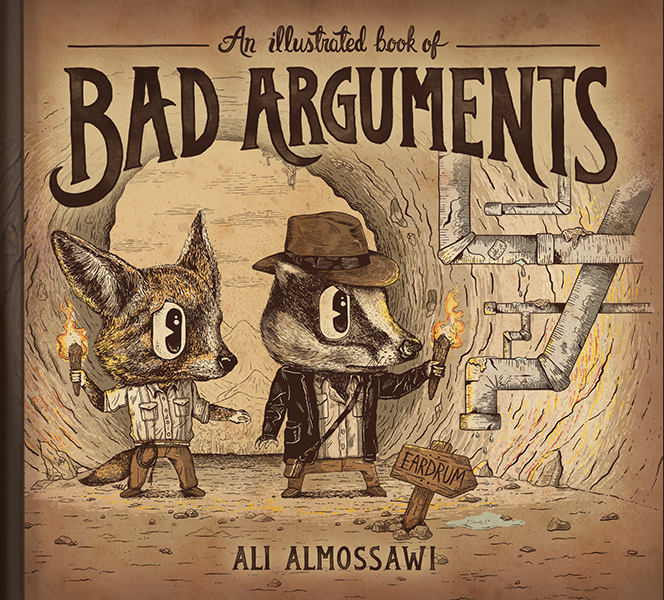
"Logic does not generate new truths, but rather allows one to evaluate existing chains of thought for consistency and coherence." Ali Almossawi, author of An Illustrated Book of Bad Arguments: Learning the Lost Art of Making Sense.


I liked the simplicity of this explanation which also is reflective of the simple elegance of the text.

Logic when taken as a field of study can be very confusing and, to a novice like me, illogical (that is what we call irony).  Almossawi, however, takes the most common types of arguments and reduces them down to their most basic parts to give an understandable and solid introduction to each type of logic.  Don't be fooled by the whimsical artwork, the cartoons are very good representations of each point and help deepen your understanding with relevant humor.


If you are looking for a place to start in the confusing whirl of logical arguments, An Illustrated Book of Bad Arguments is a good place to gain a foothold.

Tuesday, 31 March 2015

Book Review--Howl's Moving Castle


Every day I miss homeschooling. 
Every day I’m thankful I no longer homeschool.

However, one aspect of what we loved as a homeschooled family has stuck with us even through these past couple of years of formalized schooling.  Reading aloud!  I admit, with working and the kids’ homework and activities, we don’t get to read as often as we used to but we still press on even if it takes longer to finish out the book.

It’s amazing how, even though now my daughter is the one who always requests we read, both the boys will meander in and end up in the same room to listen.  I love to read aloud and they love to listen to stories—it’s a perfect match!

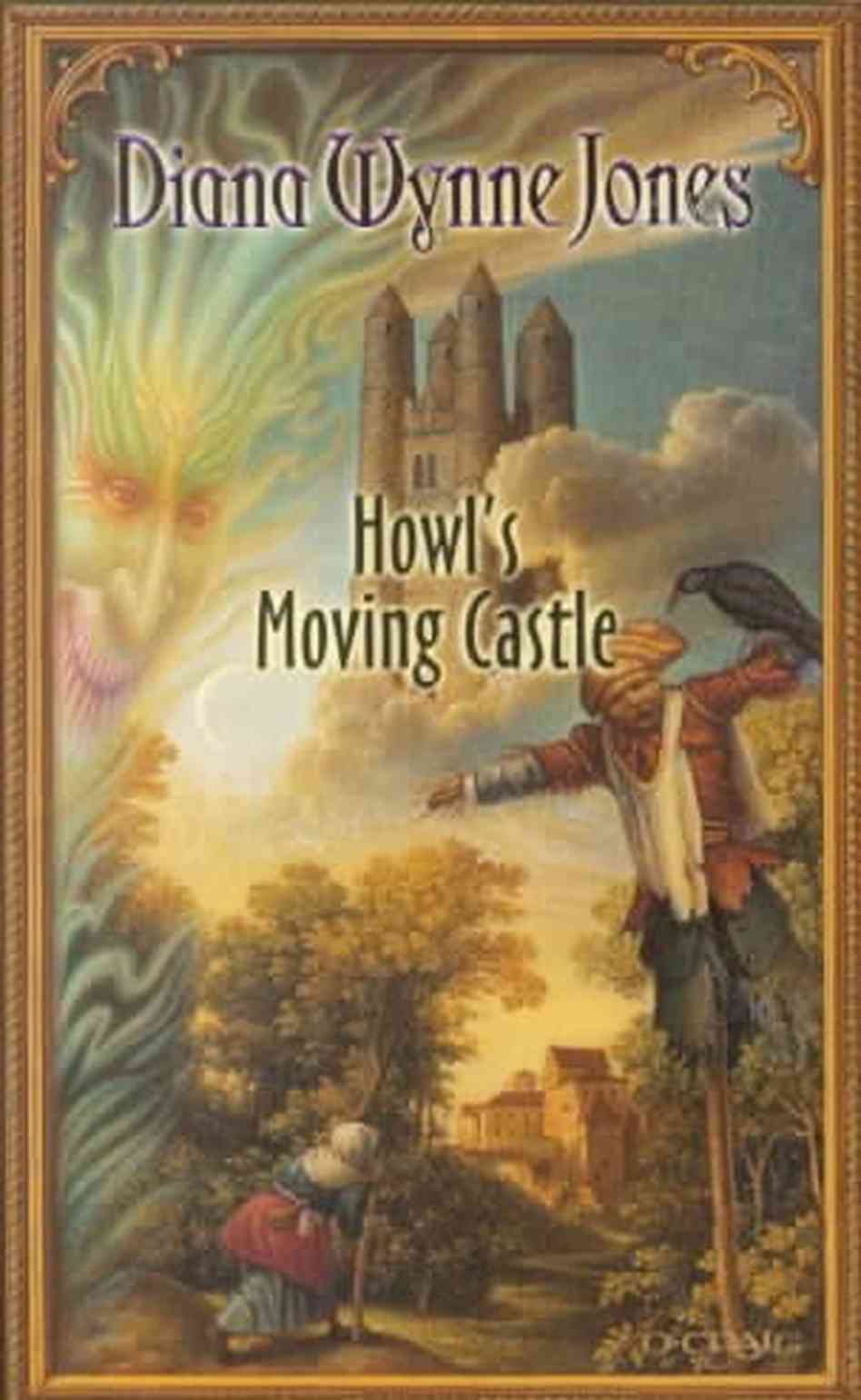
One of our more recent books that everyone thoroughly enjoyed is one of my favorite books, Howl’s Moving Castle* by Diana Wynne Jones.


It’s one of those books that can’t really find a home in the stacks: adult, young adult or juvenile lit. so you should probably check your library catalog to find out where it is in your local library’s collection (and I should mention it's not a new book).  We all enjoyed it, though, and we span all of those categories between the four of us.

This is a fun fantasy with witches and wizards and, as the title suggests, a castle that moves about.  There are adventures and green slime and learning how to like yourself and be content.  And the lesson never to make a contract that includes more than you’re willing to lose. But you’ll meet Sophie, Howl, Michael and Calcifer and be chilled by the Witch of the Waste.  The descriptions are detailed but not bogged down and each character is vivacious enough it was easy to create a recognizable voice and tone for each.

Give it a whirl, you’ll never know what will happen when you set out to find your fortune.


*If you’ve heard of or seen the anime version of this story, please forget all about it and NEVER compare the two.  It’s like looking at before and after pics of celebrity plastic surgery.

Friday, 27 March 2015

Book Review--Real Talk for Real Teachers


If you have ever stepped foot in a classroom as a teacher (or substitute) and felt overwhelmed, Real Talk for Real Teachers by Rafe Esquith has something for you!

I spent the last school year as a substitute teacher in the public school, culminating with the last 12 weeks of the year as a permanent sub for 8th grade Language Arts.  I knew my subject and have a passion for it, I've taught in various informal setting and in small classes at the university level.  But I was not prepared for a classroom of 27 8th graders.  From the horrifyingly frustrating moment when a boy unhooked a girl's bra when we were supposed to be watching the afternoon news program to an irate parent wondering why her daughter didn't get the same grade as another student even though she didn't do the work, I spent many moments treading water, trying to gasp for breath.

That is all behind me currently as I am happily ensconced in my field of education and training: librarianship (although if you're read some of my earlier posts you'll see being in the public library brings its own challenges).  But I believe in learning all I can about any of the various endeavors I try so this book was a wonderful tool to that end.

Grouped into three sections, the beginning teacher, the mature teacher and the experienced teacher, Rafe Esquith addresses the challenges and benefits of each season of a long-term classroom teacher. For newbies, they will find comfort in the reassurance that all great teachers were once new teachers. For the teacher who has settled into his/her stride, encouragement to fight against the comfort of the rut.  And for the experienced teacher who has been at it for decades, the freedom to explore.

Esquith uses a combination of theory, explanation and real-life examples from his own classroom and other interactions he has observed between teachers and students.  Just when I thought he was becoming unrealistically optimistic, he would discuss an obstacle or a failure.  He also does not shy away from the turmoil that politics and standardization have created in the classroom.  Parental interactions are outlined in both the positive and negative.  And very, very frank statements such as "This job can kill you" ensure that new or prospective teachers will know what they are getting in for when they enter the classroom.

If you are even considering a career in education, this is a spectacular book to read to get a realistic account of what being a teacher is.  You will find successes, failures, lesson learned and encouragement in the pages of this gem of wisdom.

Thursday, 18 December 2014

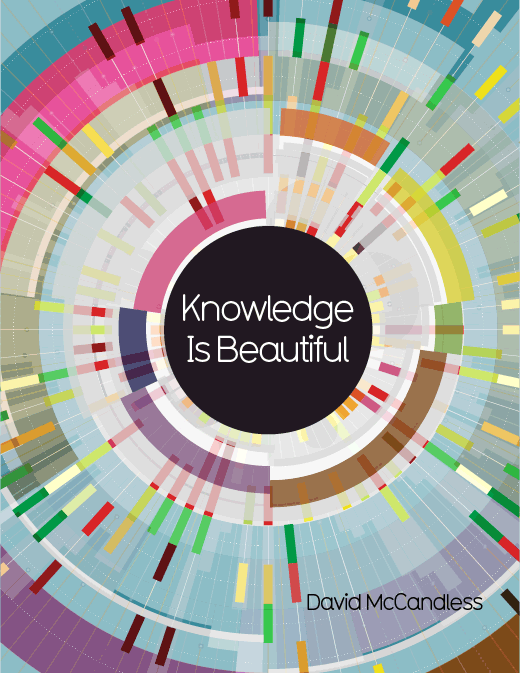
Book Review--Knowledge is Beautiful


I am awed, overwhelmed, intrigued, challenged and critical of this book.


Knowledge is Beautiful by David McCandless is a stunning display of information; each page is packed with the same amount of information found in a chapter or even the entirety of a book.  But all of this information is represented with color, shapes and arrangements to demonstrate, not just the pieces of the facts but also their relationship to each other.

That’s a lot to ask from a bunch of shapes on paper but with the field of infographics, that is the ultimate goal.  Represent as much information as possible with as few words as possible.  Show ratios, proportions and relationships all on a 2D plane.  And David McCandless is a master artist within this medium.

The challenge for me, however, is that I am a very verbal person.  I compulsively read words; signs, subtitles, menus, anything!  So I often look over the illustrations in a book because they don’t have the same impact for me.  This was first challenged when I read the fantastic book The Invention of Hugo Cabret by Brian Selznick which is a wonderful interpretation of the concept of a “graphic novel”.  The detailed illustrations are woven into and tell the story in between the text.  If you don’t “read” the pictures, you can’t really follow the book.  Great practice for me but not quite enough to prepare me for McCandless’ onslaught of pictorial stimulation.

A dizzying array of subjects is offered, loosely separated into four categories which are themselves shuffled like a deck of Vegas cards so that examples from each section are combined, seemingly at random.  Even looking at the table of contents is somewhat confusing when you are trying to find the category for a certain infographic and have to search for the page number because the table is not sequential. When flipping through the book, you will find a graph on the statistical probabilities of things happening to you; a one in “X” chance of correctly guessing a roulette number twice in a row or dying in a car crash driving to buy a Lotto ticket.  The next page features simple sketches of famous people (Jesus and Gandhi at the top) with ratings of their viewpoints along an oppression/progression continuum.  I would advise taking a deep breath before turning pages to prepare yourself for the next assault of information.

That being said, this is chock full of great information, and once understood these facts and relationships are remembered quite vividly because of the visual representations.  I think the key is to have a few guidelines before setting out on the adventure:

  • Remember that each infographic will have its own color scheme and legend of icons
  • First look at the title and read the legend to find out what the colors, images and sizes represent
  • Check to see how many pages a related infographic takes up.  Some only 1, some 2 and some more; there might be page flipping involved
  • Take a deep breath and move your eyes to something neutral in between disparate graphs
  • Take it slowly, trying to read the entire book at once is like trying to listen to 7 college lectures simultaneously on different subjects.
  • Try to appreciate both the informational aspects as well as the conceptual design at the same time


Factoid aficionados will find their match in this densely represented set of information; no quirky sayings, no snarky one-liners to memorize and toss out to unsuspecting bystanders but a satisfying baseline of information on hundreds of different subjects.